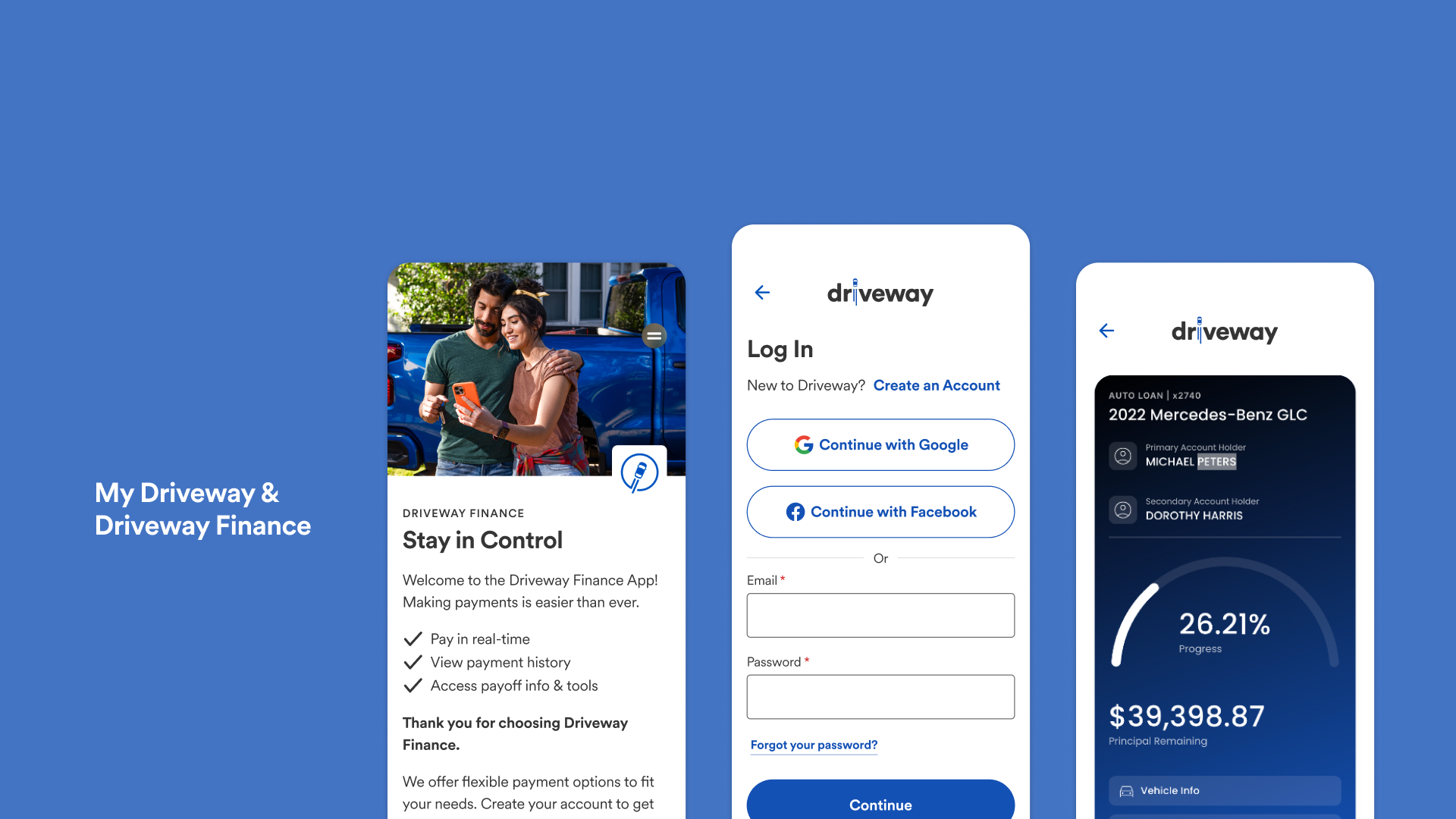
The situation
As the largest auto dealership network in the nation, Lithia is huge. Under the hood, there's way more than just dealerships: there's a finance company, an e-commerce platform, and more. With all these offerings, customer loyalty is a big focus of theirs. My Driveway was introduced as the central hub, an authenticated owner experience inside Driveway.com where customers gain access to features that could deepen their relationship with Lithia: service scheduling, extended warranty purchases, vehicle management.
Driveway Finance Corporation (DFC) had 60k users signing in every day to their independent payment portal app. This felt like a no brainer. Route all those users through My Driveway and increase the chance of those users scheduling service, purchasing warranties, and sticking around.

Connecting Driveway, Financing, & Dealerships
The complication
The timing made it harder. DFC was already planning an upgrade to a newer version of their payment portal, and that upgrade required all existing customers to create new accounts. Nobody loves that. Asking 60k users to do it as part of a platform consolidation they hadn't asked for meant the new experience had to be smooth enough that people didn't notice they were doing something annoying.
The new flow had a few things to pull off in sequence: get the user to create a My Driveway account, surface their existing DFC loan, link the accounts quietly in the background, and then get them to their payment portal. Each step had to feel like a natural continuation of the last, not a series of hoops.
Two entry points, one destination
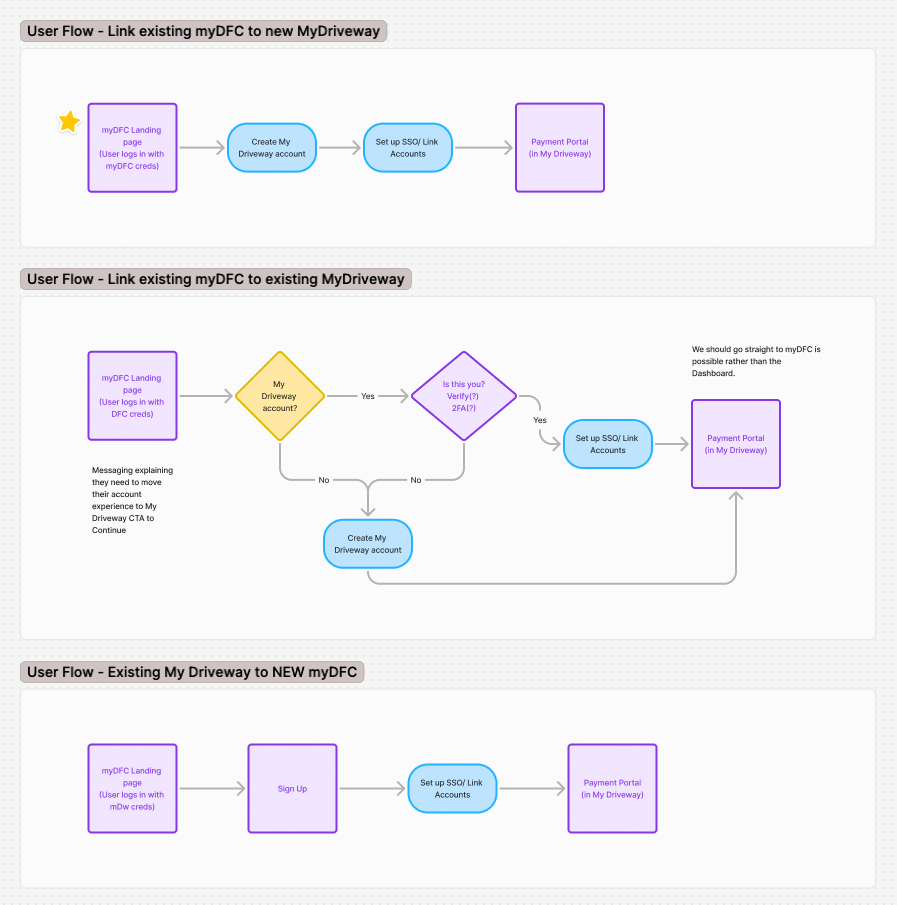
Not everyone was starting from the same place.
DFC customers who had never used Driveway.com were coming in cold. They were used to opening an app, typing a username and password, and getting to their payment portal. The new flow asked them to create a My Driveway account first, look up their loan, and let the system handle the account connection in the background before surfacing the portal. A lot of steps for someone who just wants to make a car payment. The connection had to feel like a feature, not a detour.
Existing My Driveway customers who also had DFC accounts had a shorter path. Log in as usual, go to the Driveway Finance section, complete the loan lookup, and the account connection happened behind the scenes. For them, the payment portal showed up as a natural extension of something they were already using.
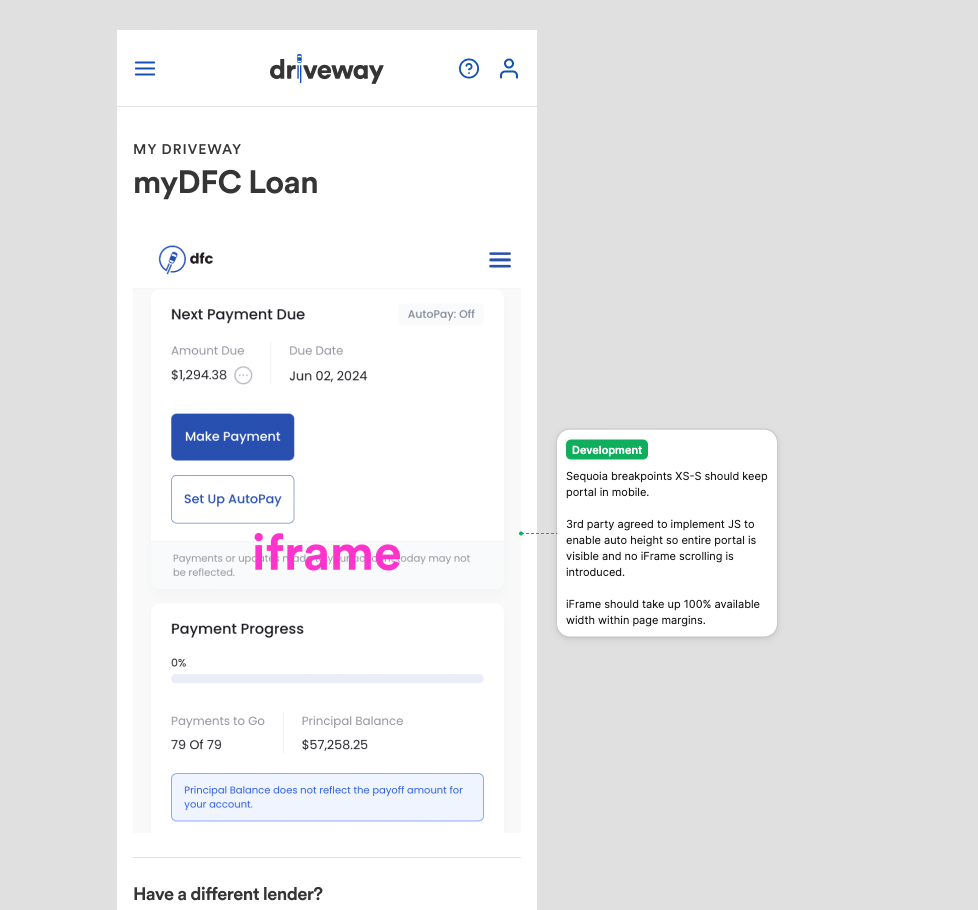
Both paths ended in the same place: the DFC payment portal rendered in an iframe inside My Driveway, with the account relationship handled quietly in the background.
The DFC app problem
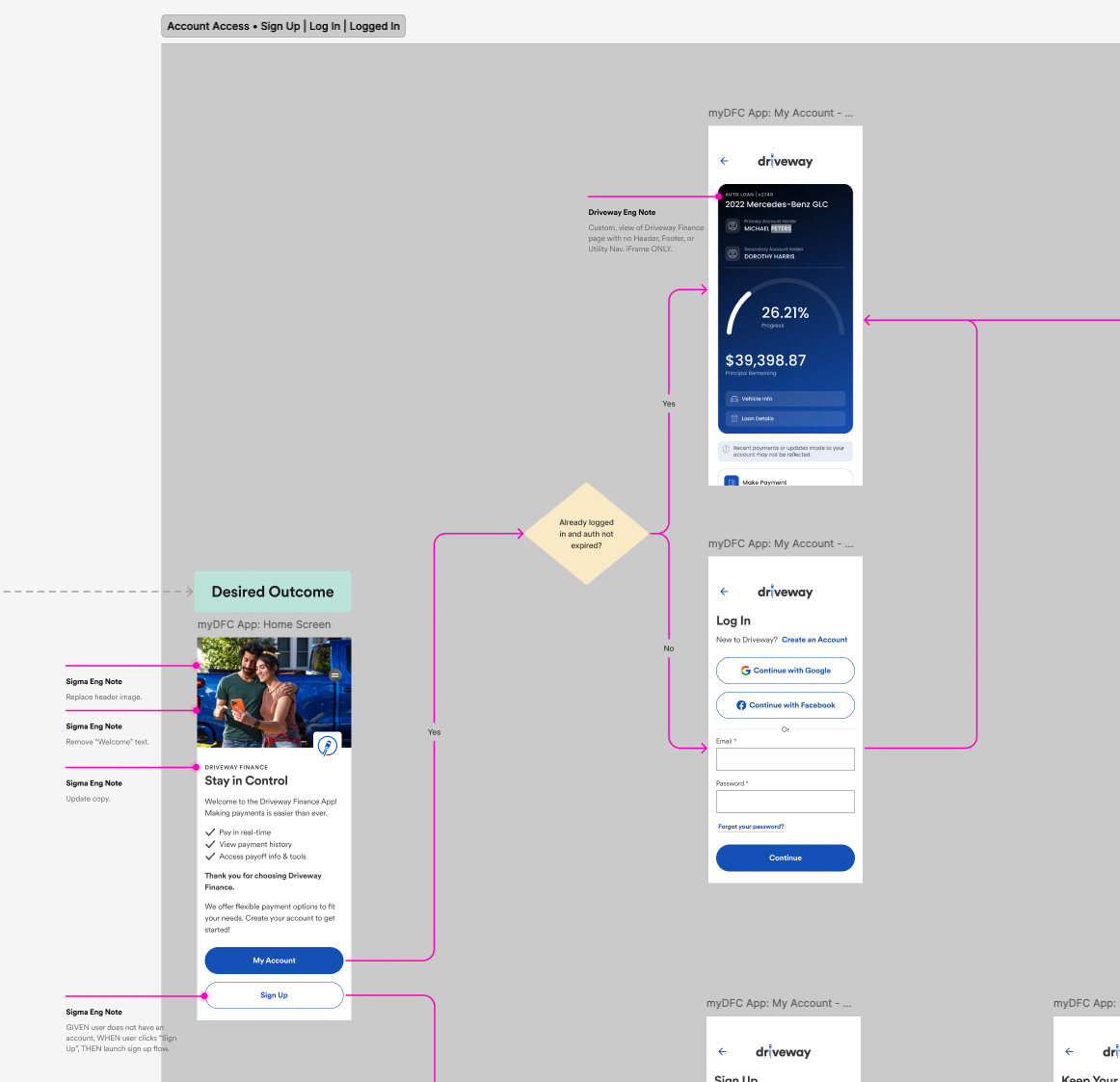
DFC customers also had a native mobile app, and they weren't going to stop using it just because the backend changed. That app was a native wrapper pulling in the Driveway.com website. We used JavaScript to strip it down, suppressing the full My Driveway interface and surfacing only the payment portal through the wrapper. DFC app users got exactly what they came for, inside the app they already had, with no sign that anything underneath had changed.
If a DFC customer logged in through My Driveway directly rather than through the app, they got the full experience, including everything Lithia hoped they would eventually discover. The app path was narrow on purpose. The web path was open on purpose.
what shipped
Six months after I took over a project that had been running for two years, we shipped a working checkout. Not a perfect one, a shippable one, which is the only kind that tells you anything.
The results were measurable: 18% improvement in navigation ease, 23% increase in users understanding how their decisions affected final cost, and near-elimination of address entry errors. The checkout that had become the team's cautionary tale became its reference point for what scope discipline actually looks like.
The three decisions weren't heroic. They were just honest. The complexity hadn't earned its place, and once that was visible, the path forward was obvious.