Sequoia Design System
Problem
The problems were clear. Teams were creating bespoke interaction patterns for every new feature. Different product teams were solving similar UX problems in unique ways, leading to what I can only describe as a "choose your own adventure" customer journey – and not in a good way. We had no unified approach to solving common e-commerce interactions specific to automotive buying and selling. And documentation? Well, let's just say if a new designer asked "how do we do this?" the answer was usually "find someone who's done it before and hope they remember how."
Key Challenges:
Design team scaled rapidly to 30 designers across multiple product teams
Bespoke interaction patterns created for each new feature
Fractured user experience across the platform
Lack of comprehensive documentation and standards
No unified approach to automotive e-commerce patterns
Resource inefficiency with duplicate solutions

Design systems are good for business. Period. Not just in a "nice to have" way, but in a fundamental, bottom-line impacting way.
Research & Discovery
We sat down with product teams, engineers, and designers to understand their daily struggles. Engineers were tired of interpreting different design specs for essentially the same components. Designers were frustrated with rebuilding common elements from scratch. And product teams? They just wanted to ship features faster. These conversations were gold – they helped us understand not just what people needed, but why they needed it.
We also did a deep dive into our team's workflows. How were designs actually making their way from Figma to production? What was slowing us down? Where were the bottlenecks? The answers weren't always comfortable, but they were necessary.
October 3-7 | Starting at $500Exploration & Iteration
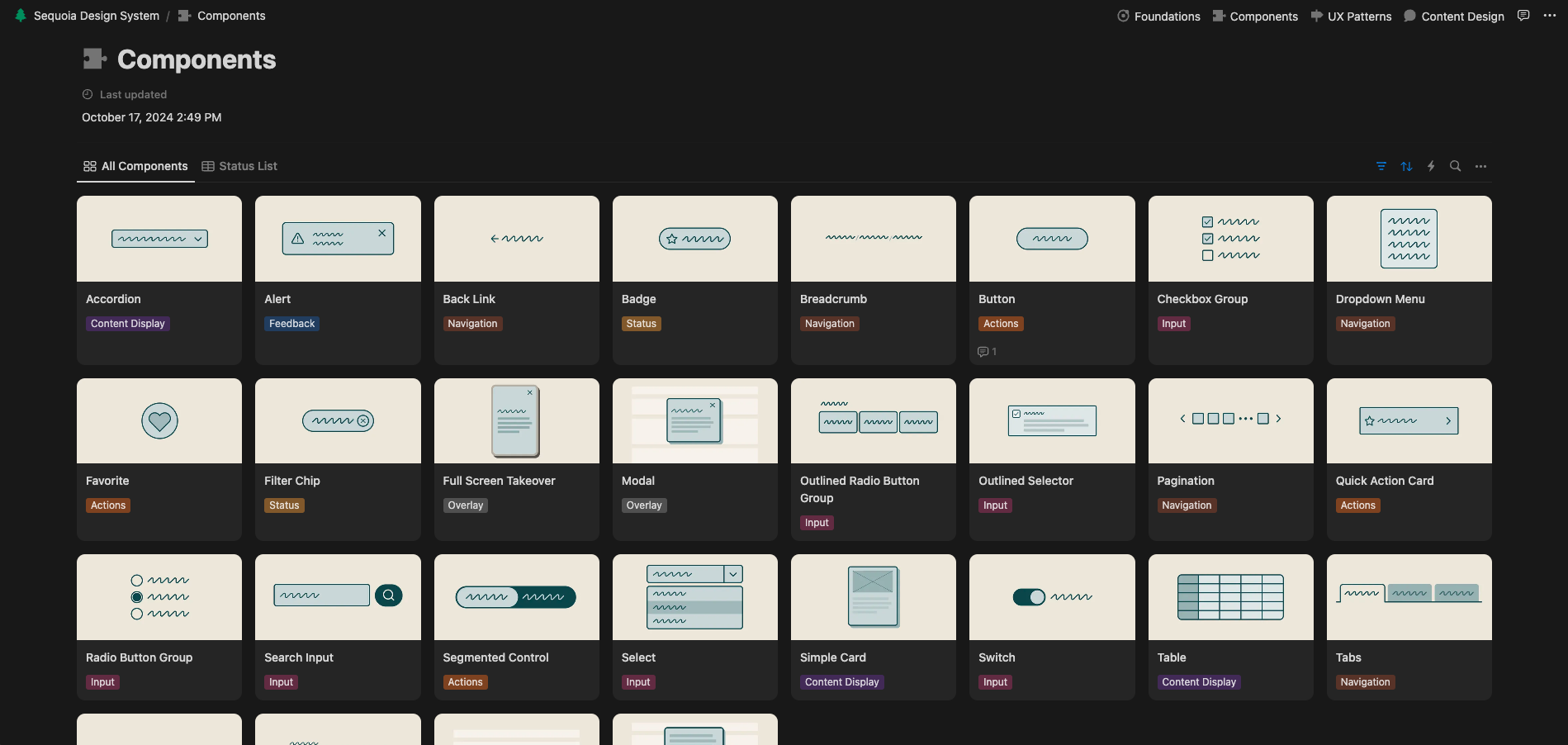
We needed infrastructure. Real, solid design operations. I'm talking about standardized design-to-development documentation, systematic workflow management, and quality checkpoints that would make even the most detail-oriented person nod in approval. We created templated specification formats ensuring every handoff to engineering was consistent.
Implementation Strategy:
Team Structure
3 full-time designers
Clear ownership and governance model
Design Operations Infrastructure
Standardized design-to-development documentation
Templated specification formats
Systematic workflow management
Quality assurance checkpoints
Rollout
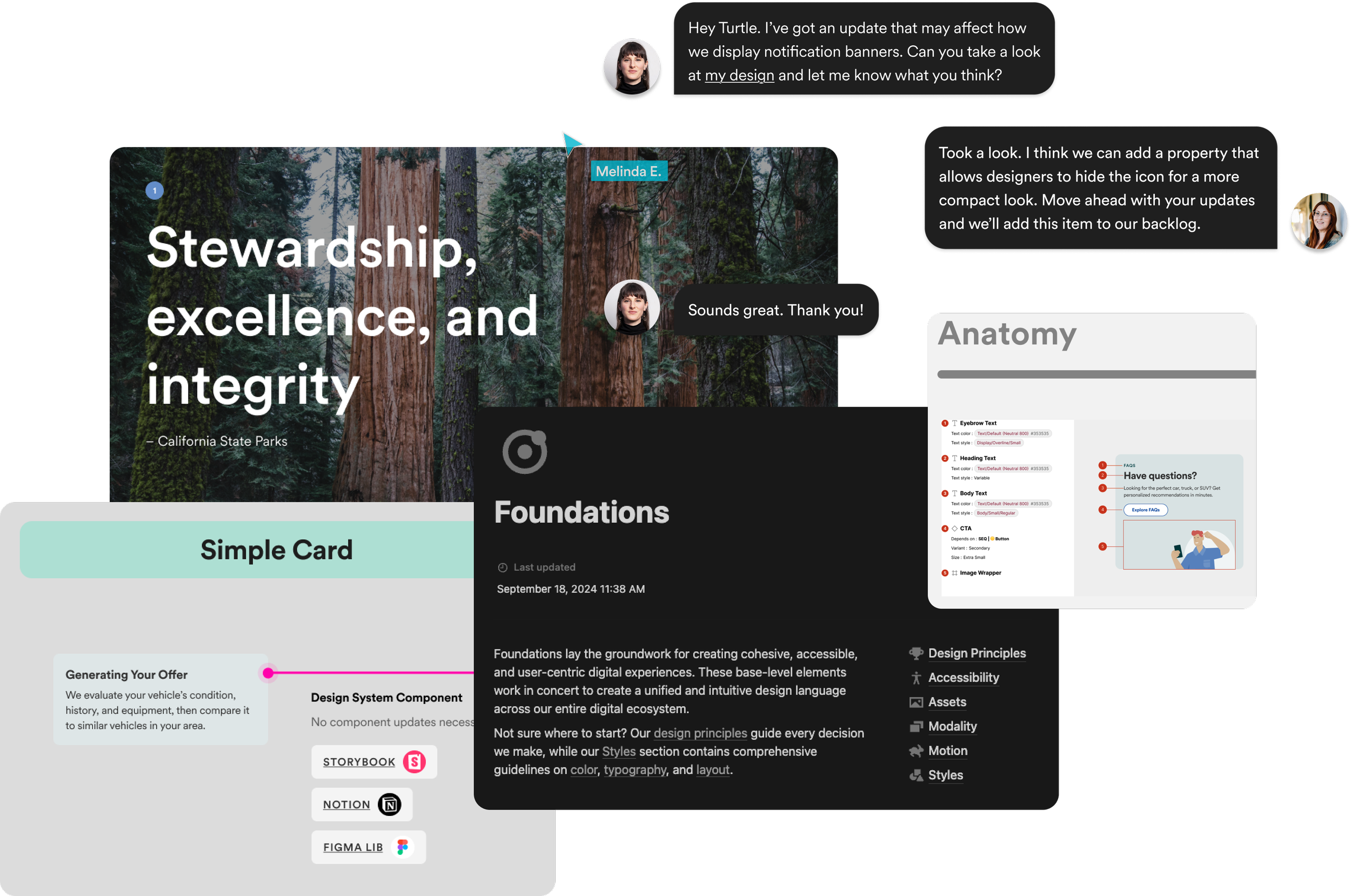
Provided hands-on support
Developed training materials
Documentation, documentation, documentation
Impact & Results
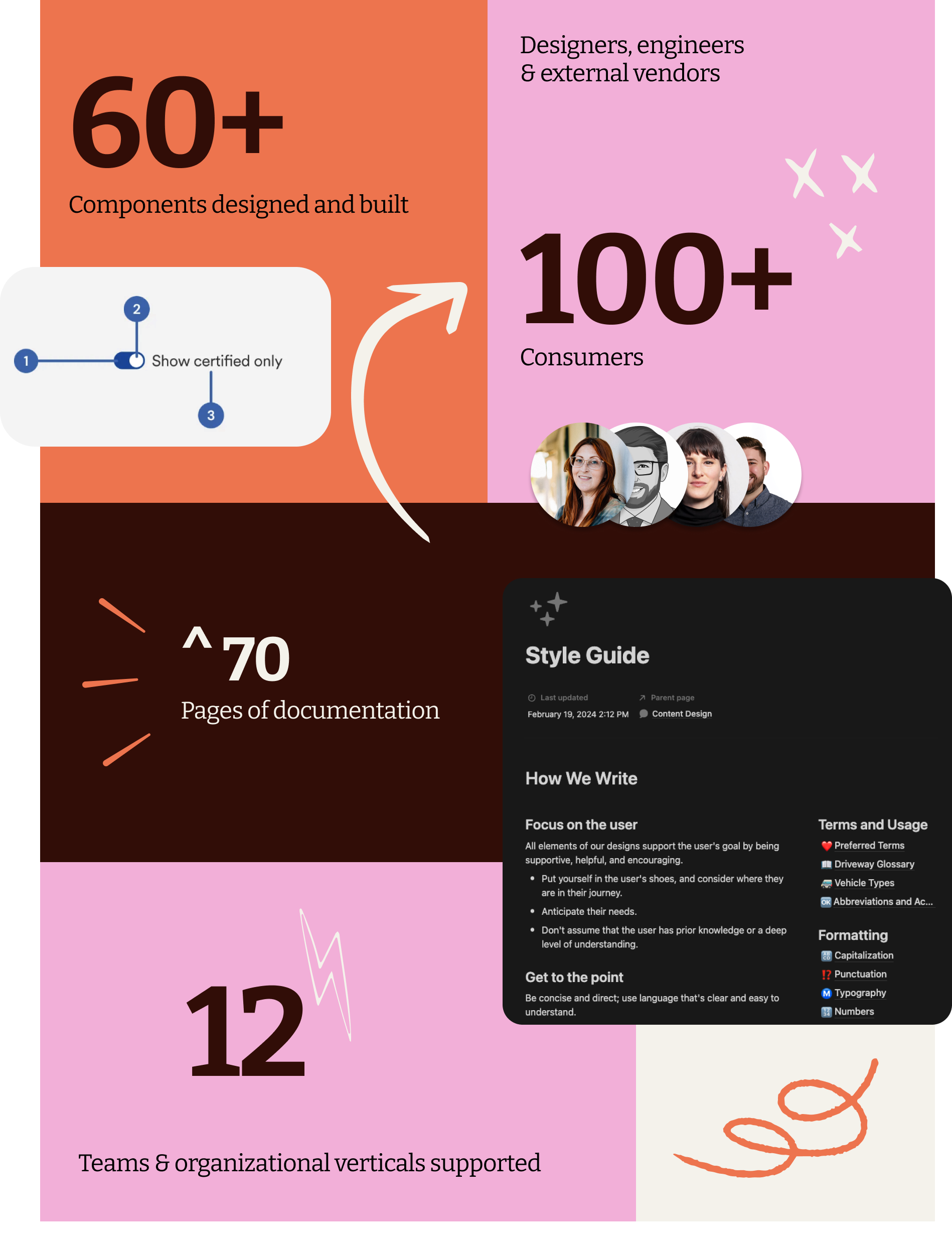
With Sequoia in place, our team became a well-oiled machine. Instead of everyone building their own versions of basic components, they were sharing, reusing, and iterating on proven patterns. The impact was massive – not just in terms of efficiency (though watching design-to-development handoff time shrink was pretty satisfying), but in the quality of what we were delivering.
But the real magic wasn't in what we standardized – it was in what we freed up our teams to do. When designers aren't spending hours debating button styles or recreating the same patterns over and over, they can focus on solving complex user problems. You know, the kind that actually move the business needle. Like figuring out how to make buying a car online feel as confident and seamless as ordering a pair of shoes.
The consistency across our platform wasn't just pleasing to my designer eye (though it was). It meant our customers could navigate confidently, knowing that if they learned how something worked in one place, it would work the same way everywhere else. In the high-stakes world of automotive e-commerce, that trust is everything.